
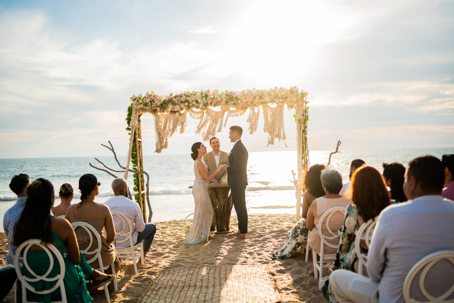
If you are planning to bring your foreign-born fiancé(e) to the United States so you can get married, the K-1 visa is the pathway designed specifically for you. Also known as the "fiancé(e) visa," it allows a U.S. citizen to bring their foreign national partner to the U.S. on a temporary basis, with the intention of marrying within 90 days of arrival. Understanding how the process works — and how long it typically takes — can help you plan ahead and feel more prepared for what lies ahead.
If you have questions about your K-1 visa case, call us at (469) 405-2966 or fill out our online contact form to schedule an initial consultation today.
What Is a K-1 Visa and Who Qualifies?
The K-1 visa falls under the broader category of family-based immigration. It is specifically available to U.S. citizens — not permanent residents — who are engaged to a foreign national and intend to marry that person within 90 days of their arrival in the United States. Both partners must be legally free to marry, meaning any prior marriages must have been legally dissolved.
To qualify, you and your fiancé(e) must have met in person at least once within the past two years, with limited exceptions for cases involving extreme hardship or cultural or religious customs. The couple must also have a genuine, bona fide relationship — not an arrangement made solely for immigration purposes. Once all qualifications are met, the process can begin.
An Overview of the K-1 Visa Timeline
One of the most common questions couples have is: How long will this take? While every case is different, the K-1 visa process generally takes anywhere from 8 to 14 months from start to finish, sometimes longer depending on government processing times, your individual circumstances, and how quickly you gather required documents. Here is a step-by-step look at what to expect.
Step 1: Filing the Petition (1 to 3 Months)
The process starts when the U.S. citizen files a petition called Form I-129F, Petition for Alien Fiancé(e), with U.S. Citizenship and Immigration Services (USCIS). USCIS is the federal agency that handles immigration benefits and applications within the United States. This form establishes that you and your partner are in a qualifying relationship and that you intend to marry.
After filing, USCIS will send a receipt notice confirming they have received the application. Processing times for this step typically range from one to three months, though they can vary. You can check current USCIS processing times online to get a more accurate estimate based on the time of your filing.
Step 2: National Visa Center Processing (1 to 2 Months)
Once USCIS approves the I-129F petition, it is forwarded to the National Visa Center (NVC), which acts as a coordination hub between USCIS and U.S. embassies and consulates abroad. The NVC will review the case and then transfer it to the U.S. Embassy or Consulate in your fiancé(e)'s home country. This step usually takes about one to two months.
Step 3: The Visa Interview at the U.S. Embassy or Consulate (2 to 5 Months)
After the case reaches the appropriate embassy or consulate, your fiancé(e) will be scheduled for an interview. This is one of the most significant steps in the entire K-1 visa process. The wait time for an interview appointment can vary considerably depending on the country and the current caseload at that particular consulate.
Before the interview, your fiancé(e) will need to gather a number of supporting documents and undergo a medical examination conducted by an approved physician. The medical exam must be completed by a doctor who is authorized by the embassy — not just any doctor — and the results are submitted directly to the embassy as part of the application package.
During the interview, a consular officer will review the application and ask questions about the relationship to confirm it is genuine. If the officer is satisfied, a K-1 visa will be approved and issued, usually within a few days to a few weeks.
Step 4: Travel to the United States (Within 6 Months of Visa Issuance)
Once the K-1 visa is issued, your fiancé(e) has up to six months to travel to the United States, though it is advisable to travel sooner rather than later. Upon arrival, your fiancé(e) will be admitted as a non-immigrant with a 90-day period to marry the U.S. citizen petitioner.
It is important to understand that the K-1 visa is a single-entry visa, which means your fiancé(e) cannot use it to travel back and forth. Once they enter the U.S. and the visa is used, re-entry under the same visa is not permitted.
Step 5: Getting Married Within 90 Days
This is perhaps the most time-sensitive part of the entire process. After your fiancé(e) arrives in the United States, you must legally marry within 90 days. There are no extensions to this window. If the marriage does not take place within 90 days, your fiancé(e) would be required to leave the country.
Getting married in Dallas is a relatively straightforward process. You will need to obtain a marriage license from the Dallas County Clerk's office, which requires both parties to appear in person with valid identification. After the waiting period required by Texas law, you can have your ceremony with an authorized officiant.
Step 6: Applying for a Green Card After Marriage (6 to 12 Months)
After you are married, the next step in the family-based immigration journey is for your new spouse to apply for lawful permanent residence — commonly known as a green card. This is done by filing a Form I-485, Application to Register Permanent Residence or Adjust Status, along with supporting documents.
This step brings its own timeline, typically ranging from six months to over a year, depending on the circumstances. Your spouse's ability to work and travel during this period will depend on whether certain interim documents, such as an Employment Authorization Document (EAD) and Advance Parole (travel permission), are requested and approved alongside the green card application.
Documents You Will Need Throughout the Process
Being organized from the start can make a meaningful difference in how smoothly your case progresses. While specific requirements can vary, here is a general overview of the documents commonly needed across the K-1 visa process:
- Valid U.S. passport and proof of U.S. citizenship for the petitioner
- Passport and birth certificate for the foreign fiancé(e)
- Proof of a genuine relationship (photos, communication records, travel records, etc.)
- Proof of any prior marriages being legally ended (divorce decrees or death certificates)
- Police certificates from all countries where the foreign national has lived
- Results of the embassy-required medical examination
- Evidence of financial support showing the U.S. citizen can support their fiancé(e)
- Completed visa application forms as required by the specific embassy or consulate
Having all of these documents ready before each stage can help prevent unnecessary delays. Missing or incomplete documentation is one of the most common reasons for setbacks in K-1 visa cases, so careful preparation is worth the effort.
Common Reasons for Delays
Even when everything is done correctly, delays can still happen. Understanding why they occur can help you stay patient and proactive throughout the process. Some of the most frequently seen reasons for delays include:
- Incomplete or incorrect forms submitted to USCIS or the consulate
- Requests for additional evidence (called RFEs) issued by USCIS, asking for more information
- High interview appointment wait times at certain U.S. embassies or consulates
- Background check processing times for the foreign national
- Changes in U.S. immigration policy that affect processing priorities
Staying in close communication with anyone helping you navigate the process — and promptly responding to any requests for additional information — is one of the best ways to keep your case moving forward. Delays caused by slow responses can be just as impactful as errors in the original filing.
How a Dallas Immigration Attorney Can Help
Navigating immigration paperwork, deadlines, and requirements can feel overwhelming, especially when so much is at stake. A knowledgeable Dallas immigration attorney can help you understand your obligations at each stage, review your forms for accuracy before submission, and advocate on your behalf if complications arise.
At Law Offices of Daniel A. Lorber, PC, Attorney Daniel A. Lorber works directly with each client to provide personalized guidance through every step of the family-based immigration process. From the initial I-129F petition through the green card application, you will always have someone in your corner who genuinely cares about your family's future.
Your Next Step Toward Getting Your K-1 Visa in Dallas
The K-1 visa process involves multiple stages, significant paperwork, and careful attention to deadlines — but you do not have to face it alone. With the right guidance, bringing your fiancé(e) to Dallas so you can begin your life together is an achievable goal. Law Offices of Daniel A. Lorber, PC is here to walk alongside you every step of the way.
To learn more about your options or to get started on your case, call (469) 405-2966 or complete our online contact form. an initial consultation is available, and services are offered in more than 240 languages, including Spanish.